
Early Signs of Endometriosis Every Woman Shouldn’t Ignore
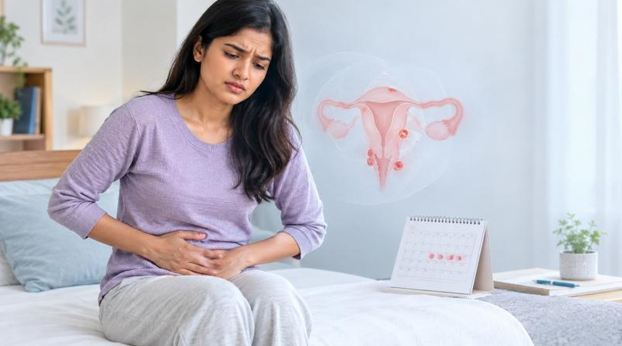
Period pain is common, but severe pain that regularly affects your daily life should not simply be accepted as “normal.” You may notice painful periods, heavy bleeding, pelvic pain, or discomfort during sex and wonder whether there is a reason behind it. These symptoms can have different causes, including endometriosis. Knowing the early signs of endometriosis can help you understand when it may be time to speak with a gynecologist.
What Is Endometriosis? A Quick Overview
Endometriosis is a condition in which tissue similar to the lining of the uterus grows outside the uterus. It can cause pelvic inflammation, pain and, in some women, fertility problems. It affects an estimated 10% of women of reproductive age worldwide.
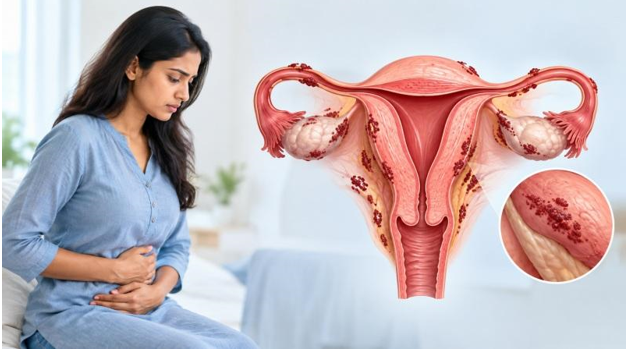
The condition is hormone-sensitive, so symptoms often become worse around your menstrual cycle. It is not simply a hormonal imbalance, and symptoms can vary greatly from one woman to another. Understanding the available Endometriosis Treatment options can help you learn what may be involved if your symptoms need further evaluation.
Why Early Signs of Endometriosis Are Often Ignored?
One reason endometriosis can take time to identify is that its symptoms may look like common menstrual problems. You may be told that painful periods, bloating or tiredness are just part of being a woman. In reality, severe or recurring symptoms deserve proper attention. WHO notes that delays in endometriosis diagnosis are common, which makes awareness of early symptoms important.
Key Early Signs of Endometriosis Every Woman Should Know?
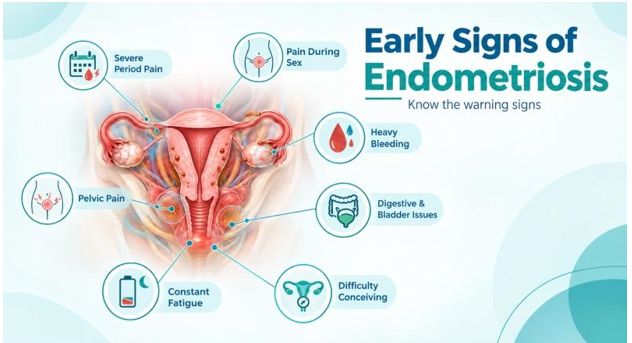
The early signs of endometriosis do not look the same for everyone. You may have one main symptom or several symptoms together. The following signs are worth discussing with a gynecologist, especially when they are severe, recurring, or interfering with your normal routine.
Unbearable Period Cramps That Painkillers Don’t Fix:
Mild cramps can happen during a period, but very severe pain is different. You may experience intense lower abdominal or back pain that makes it difficult to work, study, sleep, exercise or follow your normal routine. This is often described as dysmenorrhea, or painful periods. If usual pain relief does not provide enough relief, it may be worth asking why the pain is happening rather than continuing to tolerate it.
Pain During or After Intercourse:
Pain during or after sex, also called dyspareunia, is another symptom that should not be brushed aside. The pain may feel deep inside the pelvis and may continue for some time after intercourse. It can happen for several reasons, so it does not automatically mean you have endometriosis. However, when painful intercourse occurs along with painful periods or chronic pelvic pain, discussing the pattern with your gynecologist can be helpful.
Heavy or Irregular Bleeding:
Some women with endometriosis experience heavy menstrual bleeding or changes in their usual bleeding pattern. You may need to change sanitary products very frequently, notice bleeding that feels unusually heavy, or experience spotting between periods. Heavy bleeding can also contribute to tiredness and low iron levels. Menstrual cycle irregularities can have many causes, so tracking changes in your periods can give your doctor useful information during a consultation.
Pelvic or Lower Back Pain That Isn’t Limited to Your Period:
Endometriosis pain does not always stop when your period ends. You may have ongoing pelvic discomfort, lower back pain, pressure or aching that continues at different points in your cycle. Chronic pelvic pain can also become a daily problem and affect movement, work, sleep and relationships. Pain outside your period does not confirm endometriosis, but recurring pelvic pain is a good reason to discuss your symptoms with a doctor.
Digestive and Bladder Issues During Your Cycle:
Some women notice bowel and bladder symptoms that become worse around their period. These can include pain during bowel movements, constipation, diarrhoea, bloating, painful urination or other discomfort while using the toilet. If you notice that these symptoms follow a clear menstrual pattern, make a note of when they happen. Endometriosis can affect areas around the bowel or bladder, although other digestive or urinary conditions can cause similar symptoms.
Constant Fatigue That Sleep Doesn’t Fix:
Fatigue and endometriosis can occur together, especially when pain, heavy bleeding or poor sleep continue over time. You may feel drained even after getting enough rest, or find that your usual activities take more effort than before. Fatigue on its own is not a specific sign of endometriosis, as it can happen for many reasons. But when it appears with pelvic pain, heavy periods or other symptoms, it is worth mentioning during your gynecologist consultation.
Difficulty Conceiving:
For some women, the first clue may be difficulty becoming pregnant. Endometriosis can affect fertility through inflammation, changes around the reproductive organs, or scar tissue and adhesions. This does not mean that having endometriosis automatically causes infertility. Many women with the condition do become pregnant. However, if you have been trying to conceive and also have painful periods, pelvic pain or other symptoms, endometriosis may be one of the conditions your doctor considers.
When These Signs Overlap: Why It’s Easy to Miss Endometriosis
The challenge is that symptoms can overlap with several other conditions. For example, painful periods may occur with endometriosis, ovarian cysts or other gynaecological problems. Bloating and bowel symptoms may also have digestive causes.
| What you notice | What you can do |
| Severe period pain | Note how often it happens and how it affects daily life |
| Pain during sex | Tell your gynecologist, even if it feels uncomfortable to discuss |
| Heavy bleeding | Track the amount, duration and changes from your usual periods |
| Pelvic or back pain | Record whether it occurs only during periods or throughout the cycle |
| Bowel or bladder symptoms | Note whether they become worse around menstruation |
| Fertility concerns | Discuss your history and symptoms during a fertility evaluation |
Looking at the full pattern, rather than one symptom alone, can help your doctor decide what needs further evaluation.
How Endometriosis Is Diagnosed?
There is no single symptom that confirms endometriosis. Your doctor may start by asking about your periods, pain, bleeding, bowel or bladder symptoms, sexual pain and fertility history. A physical examination and imaging such as an ultrasound may also be recommended. WHO states that a clinical diagnosis can be made using symptoms and imaging in some cases, and surgery is not always needed before treatment.
In some situations, a laparoscopy for endometriosis may be considered. This is a minimally invasive surgery in which a camera is used to examine the pelvis and, when needed, treat visible endometriosis. For specialised evaluation, you may also consider speaking with an experienced endometriosis surgeon.
What to Do If You Notice These Signs?
You do not need to wait until your symptoms become unbearable before asking for help. A simple record of your symptoms for a few menstrual cycles can make your appointment more useful.
Before your gynecologist consultation, note:
- When the pain starts and how long it lasts
- How severe the pain feels
- Whether pain affects work, sleep, exercise or daily activities
- Changes in bleeding or your menstrual cycle
- Bowel or bladder symptoms around your period
- Pain during or after intercourse
- Any difficulty getting pregnant
When to see a gynecologist for pelvic pain depends on your symptoms, but recurring pain that interferes with your normal life deserves attention. You do not have to decide what the cause is on your own.
Conclusion: Don’t Wait to Get Answers
Your period should not regularly force you to put your life on hold. Severe cramps, heavy bleeding, pelvic pain, painful intercourse, bowel or bladder symptoms, fatigue or fertility issues can have different causes, but they are worth discussing when they keep coming back.
Early awareness does not mean assuming you have endometriosis. It simply means paying attention to your body and getting the right medical advice. If these signs sound familiar, consider having a conversation with a gynecologist or specialist who understands chronic pelvic pain and endometriosis.
